When people talk about fleet efficiency, the conversation usually goes straight to fuel costs, routes, tracking systems and driver behaviour.
But there is another part of the picture that is much easier to miss.
What is happening in the back of the bakkie?
A badly organised vehicle can waste a surprising amount of time.
A technician arrives on site and cannot find the right part. A toolbox has been moved to another vehicle. Something needed for the job is buried underneath three other boxes.
Each delay may only take a few minutes, but across a busy fleet, those minutes add up.
The Load Bin Is Part of the Job
For a working bakkie, the load area is more than a place to put things.
It is part of the workspace.
If your business operates electricians, plumbers, technicians, maintenance crews or construction teams, the vehicle should support the job they are doing.
That means thinking about the load area in the same way you would think about a storeroom.
The easier it is to find equipment, the easier it is to get on with the job.
Start With a Simple System
You do not need anything overly complicated.
The first step is simply deciding where things should go.
A vehicle might be divided into basic groups such as:
- Everyday tools
- Specialist equipment
- Consumables
- Replacement parts
- PPE
- Paperwork
- Emergency equipment
The items used most often should be the easiest to reach.
There is no point having a neat storage system if the team has to unpack half the vehicle every time they need something basic.
Consistency Helps Across a Fleet
If you have several similar bakkies, try to keep the basic layout consistent.
That makes a bigger difference than it may seem.
When employees change vehicles, they do not have to learn a completely new setup.
They already know where the tools, stock and safety gear are likely to be.
This can also make training easier for new team members.
Instead of explaining a different system for every bakkie, you have a basic standard everyone understands.
A Canopy Creates More Usable Space
An open load bin is useful, but it has its limits for a working fleet.
Tools and stock are exposed to the weather, and valuable equipment is easier to see.
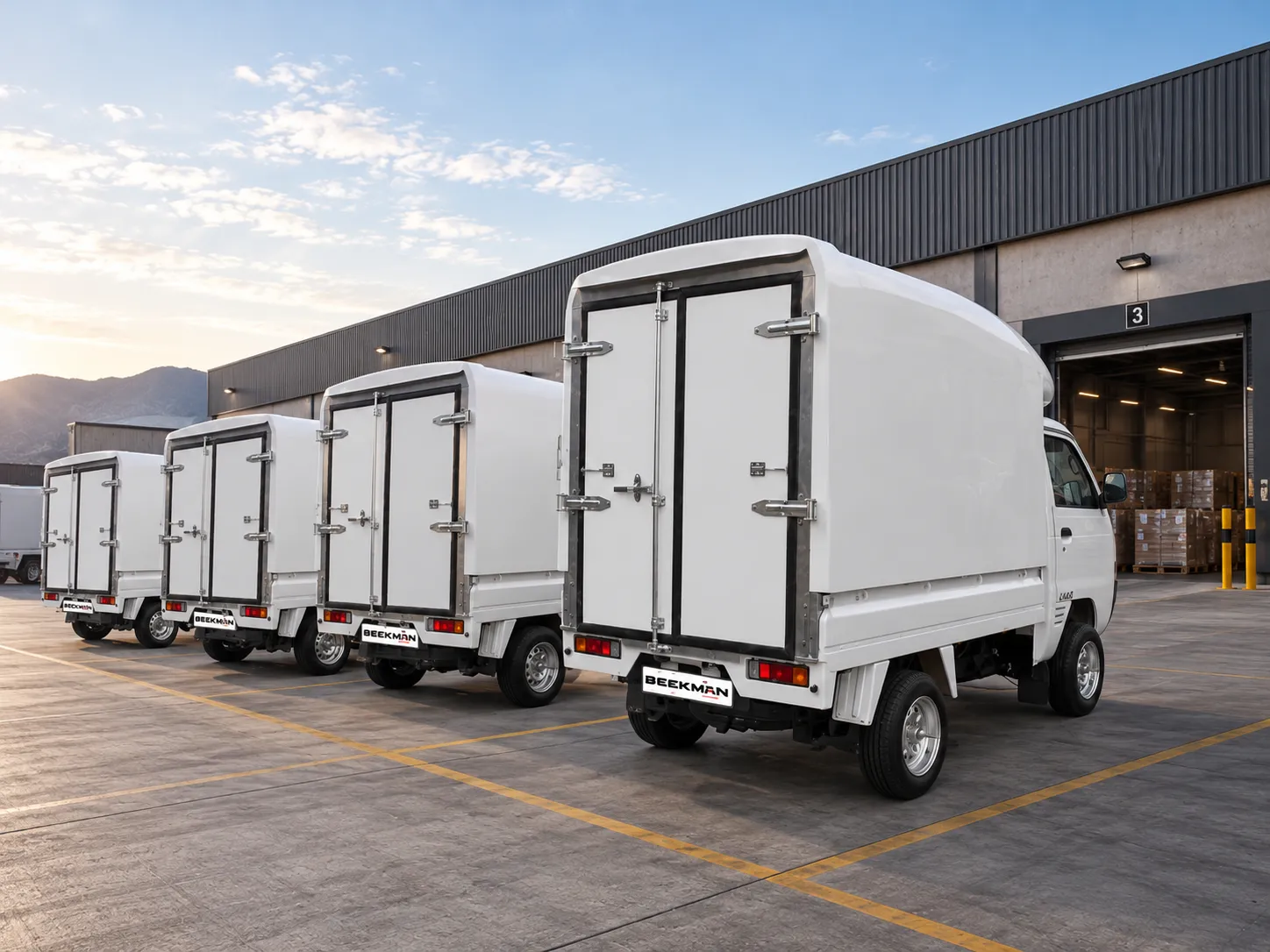
A canopy turns the load area into a covered, enclosed space that can be used much more effectively.
Fibreglass bakkie canopies are popular for fleet vehicles because they offer a practical balance between durability, appearance and everyday usability.
They also give the vehicle a more finished look.
Protect Equipment From Daily Wear
Fleet vehicles rarely have easy lives.
They travel between sites, suppliers, customers and depots all day.
Dust, rain and sun are simply part of the job.
Keeping tools and equipment under cover can help reduce unnecessary exposure and wear.
This matters because damaged equipment does not only cost money to replace.
It can also delay a job if the team does not have what they need.
Avoid Repacking the Vehicle Every Day
A better storage setup can reduce the amount of loading and unloading employees need to do.
Without an enclosed load area, tools may need to be moved in and out constantly.
That wastes time and creates more opportunities for things to go missing.
With a properly organised canopy, the vehicle can stay largely work-ready.
At the start of the day, staff can check stock levels, load any job-specific items and leave.
That is far more efficient than rebuilding the load from scratch every morning.
Not Every Fleet Vehicle Needs the Same Canopy
It is tempting to choose one setup and roll it out across the fleet.
Sometimes that works.
Sometimes it does not.
A single cab canopy may suit a vehicle used mainly for tools and materials.
A double cab canopy may be better where a team needs to travel together.
Some vehicles may need more height, while others only need simple enclosed storage.
The key is to match the canopy to the role of the vehicle.
Better Storage Can Improve Stock Control
Small consumables disappear easily.
A few fittings, connectors, fasteners or rolls of cable may not seem like much, but across a large fleet, those losses add up.
An organised canopy makes it easier to see what is in the vehicle.
Simple containers, labelled sections or designated storage areas can help staff identify what needs replacing before they leave for the next job.
That can reduce unnecessary trips back to the depot or supplier.
Your Fleet Is Part of Your Brand
There is also a visual side to this.
Your vehicles are often seen by customers long before they meet your team.
A clean, organised bakkie with a professional canopy gives a different impression from a vehicle with loose tools and equipment piled into an open load bin.
It may not be the main reason to improve storage, but it certainly helps.
Look Beyond the Purchase Price
Bakkie canopy prices are always going to matter, especially when you are buying for several vehicles.
But the starting price is only one part of the equation.
If better storage saves a technician ten minutes on several jobs a day, protects expensive equipment and reduces unnecessary trips, there is value beyond the initial cost.
The cheapest canopy for sale is not always the cheapest option over the life of the vehicle.
Fitment and Support Matter
For fleet operators, reliable support is important.
Vehicles may be working in different towns or provinces, so access to a recognised canopy fitment centre can make things easier.
Beekman’s nationwide fitment network gives fleet operators access to fitment, servicing and support across South Africa.
That becomes particularly useful when vehicles are spread across several regions.
Reviewing your fleet? Speak to Beekman, request a quote or visit your nearest Fitment Centre to find the right canopy solution: https://beekman.co.za/
See what’s happening at Beekman, follow us on Facebook for new fitments, canopy solutions and the latest from the Beekman team: https://www.facebook.com/BeekmanCanopies/
